Introducing Amazon CloudWatch Omni: AI-powered observability for modern application and agentic architectures

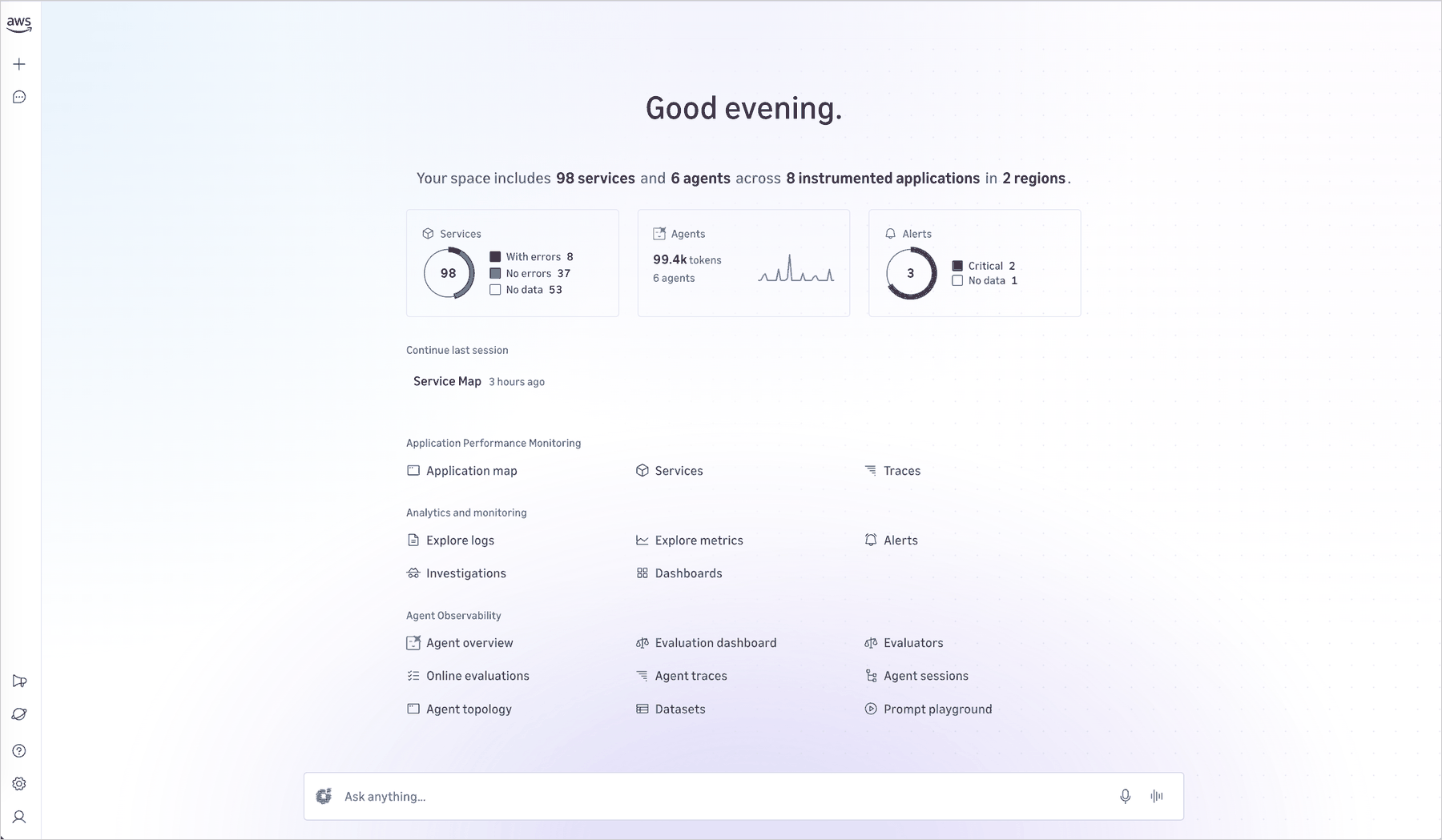
The landscape of cloud observability is undergoing a seismic shift as Amazon Web Services (AWS) officially launches Amazon CloudWatch Omni, a specialized, AI-driven platform designed to unify the monitoring of traditional applications and next-generation generative AI agentic workloads. By decoupling the observability experience from the traditional AWS Management Console, Amazon is positioning Omni as a dedicated workspace that prioritizes collaborative investigation, automated discovery, and intelligent remediation. This development marks a significant departure from legacy monitoring tools that often leave teams siloed within fragmented dashboards and disconnected communication threads.
The Evolution of Cloud Observability
For over a decade, infrastructure monitoring relied on static dashboards and manually configured thresholds. While effective for monolithic environments, this approach has struggled to keep pace with the rise of microservices, serverless functions, and the recent explosion of large language model (LLM) agents. Engineering teams have historically faced a "context-switching tax," where responders must move between logs, metrics, traces, and internal documentation, often losing critical incident metadata during the hand-off process.
CloudWatch Omni addresses this by utilizing the OpenTelemetry standard as its backbone. By integrating directly with existing telemetry streams, Omni eliminates the need for teams to re-instrument their applications. It serves as a secondary, specialized layer—an "observability hub"—that sits above the raw data, transforming noise into actionable insights.
Core Features and Technical Architecture
At its heart, CloudWatch Omni is defined by three primary technical advancements: enterprise-grade collaborative workspaces, autonomous system discovery, and the integration of the Amazon DevOps Agent.
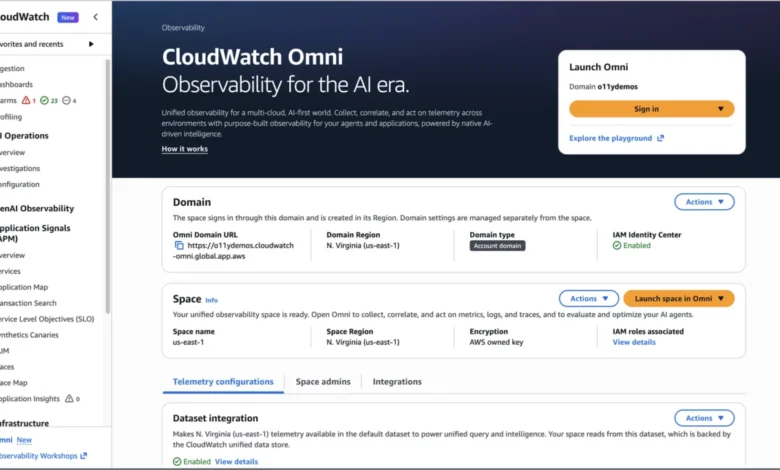
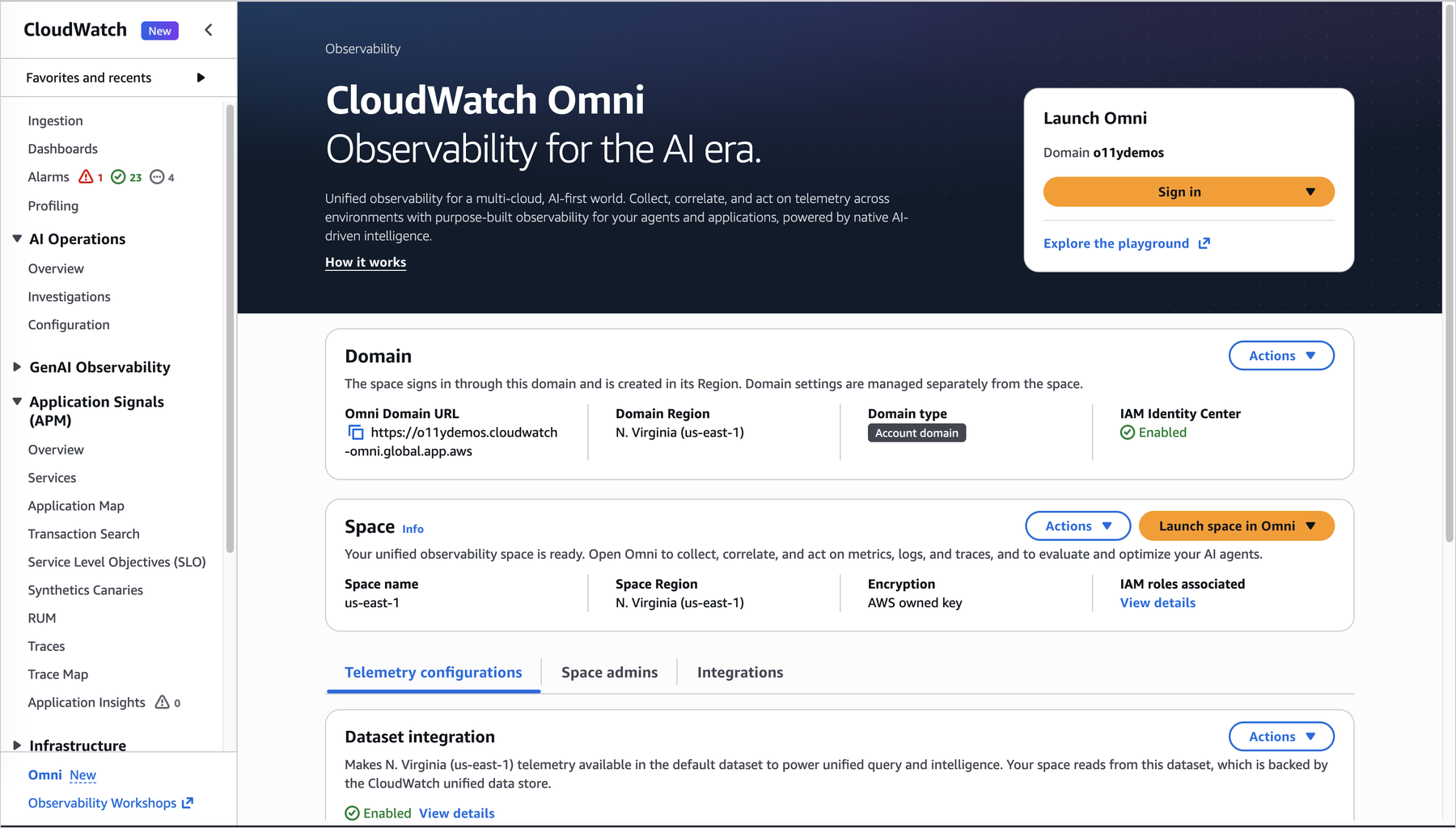
The platform provides a unified URL access point, bypassing the need for standard AWS Console credentials. By leveraging IAM Identity Center, organizations can integrate their existing identity providers—such as Microsoft Entra ID or Okta—to manage access. This enables SREs, software developers, and product managers to work within a single "Space," ensuring that every participant in an incident investigation views the same data set and historical context.

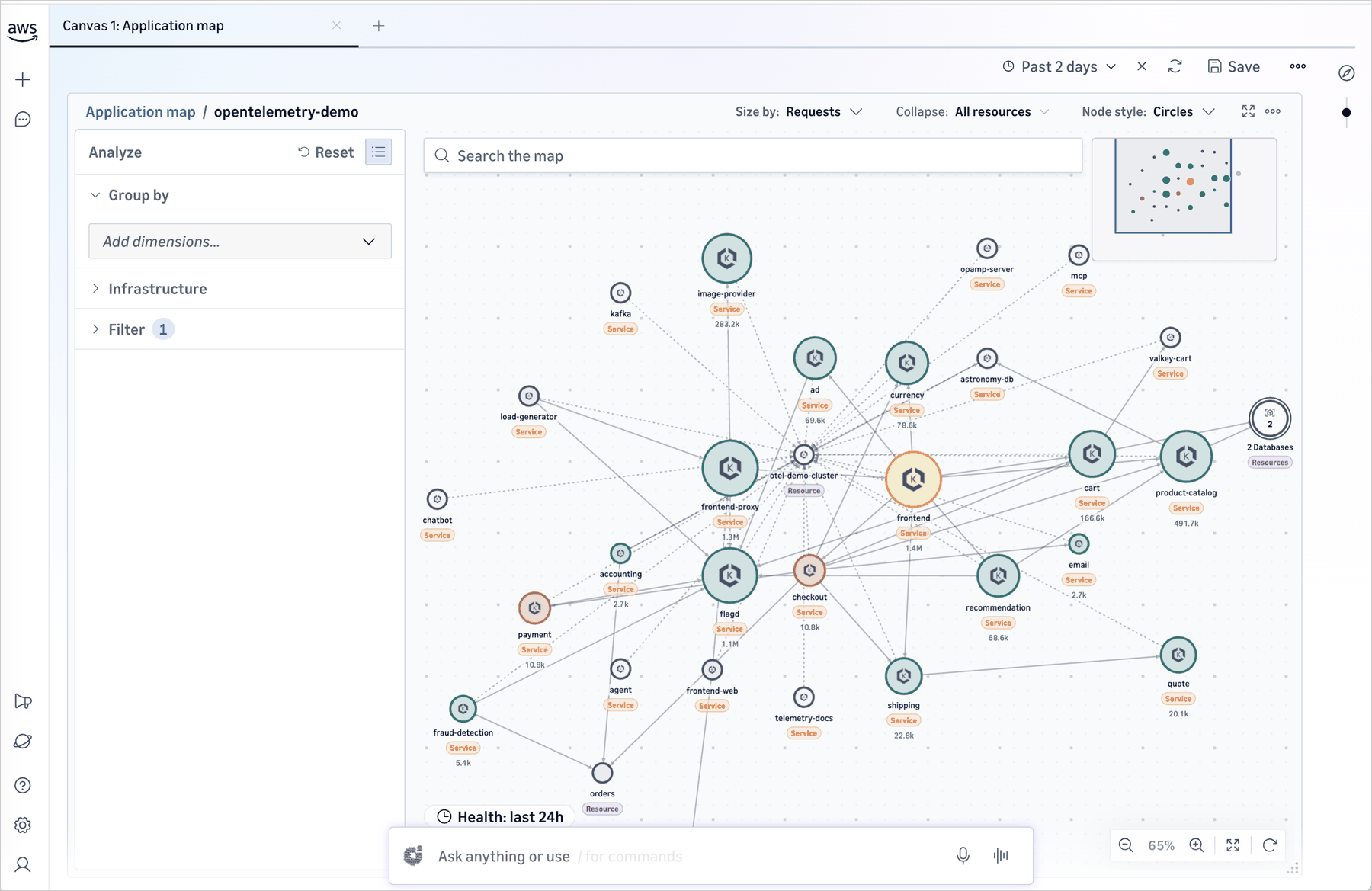
The system’s ability to adapt to evolving topologies is perhaps its most significant departure from traditional monitoring. Instead of requiring engineers to manually update dashboards when a service is deployed or retired, Omni utilizes automated discovery to map dependencies in real-time. By declaring "intents"—such as latency budgets or error rate thresholds—the system automatically adjusts its monitoring focus, effectively reducing the "dashboard maintenance" burden that plagues modern DevOps teams.
The Role of the Amazon DevOps Agent
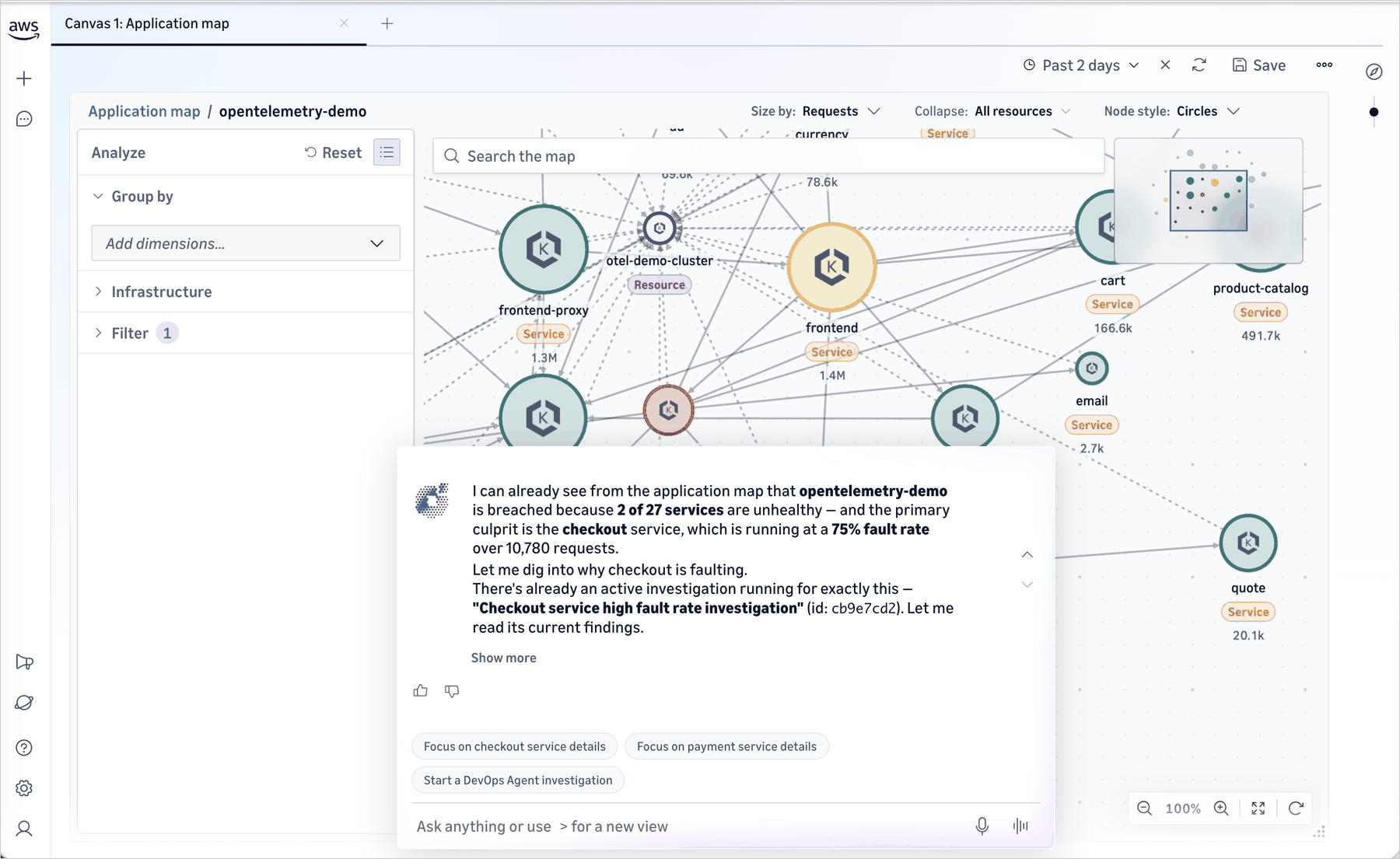
The integration of the Amazon DevOps Agent represents the shift toward "agentic observability." Unlike simple automation scripts that trigger on a static condition, the DevOps Agent participates in the investigation process. It is designed to:
- Correlate Signals: Automatically link deployment timestamps with performance degradation.
- Trace Root Causes: Navigate dependency graphs to identify which downstream service is contributing to upstream failure.
- Document History: Automatically record the steps taken during an investigation to eliminate the need for manual post-incident reporting.
In a typical incident scenario, when an alarm is triggered—such as a spike in 5xx errors—the agent pre-loads an investigation session with relevant telemetry. By the time a human engineer arrives, the agent has already performed the initial correlation, highlighting, for example, that a payment gateway API experienced a latency jump exactly 120 seconds after a specific configuration deployment.
Industry Implications and Market Context
The release of CloudWatch Omni comes at a critical time for enterprise IT. According to industry data from organizations like the Cloud Native Computing Foundation (CNCF), the complexity of microservices architectures has reached a point where manual monitoring is no longer sustainable. Organizations are increasingly looking for "single-pane-of-glass" solutions that bridge the gap between infrastructure health and AI model performance.
By basing the platform on OpenTelemetry, AWS is signaling a shift toward industry-standard interoperability. This is a strategic move; by allowing non-AWS workloads to feed into an OTLP endpoint, AWS is ensuring that CloudWatch remains the primary observability destination even for companies operating in hybrid or multi-cloud environments.
Furthermore, the introduction of "Spaces" for team-based observability reflects a broader move toward "Team-Centric Monitoring." This is expected to influence how DevOps organizations are structured, potentially blurring the lines between SRE and application development roles, as both gain equal access to the same diagnostic tools and historical incident data.
Chronology of the Deployment
The path to CloudWatch Omni began with the incremental refinement of the Amazon DevOps Agent and the maturation of AWS’s managed observability suite. Following a period of private preview and internal testing, AWS officially introduced the agentic observability capabilities for generative AI workloads in early 2026. This paved the way for the full-scale launch of Omni, which encompasses both application and AI agent monitoring. The final rollout in September 2026 was accompanied by the integration of Microsoft Entra ID, ensuring compliance with enterprise security requirements.
Operational Workflow: From Setup to Resolution
For organizations looking to deploy CloudWatch Omni, the process is streamlined to minimize operational overhead. An administrator designates a dedicated domain via the IAM Identity Center. Once the domain is established, "Spaces" are created, corresponding to specific engineering squads or application environments.
Because Omni points to existing CloudWatch telemetry, there is no migration of data, which effectively eliminates the risks associated with moving large volumes of logs and traces. Once a Space is initialized, the platform automatically generates an application topology map. From there, users can perform "natural language queries," asking the system, for example, "Why did the checkout service latency increase between 2:00 PM and 2:15 PM?" The system then synthesizes the answer based on trace data, log patterns, and recent deployment history.
Strategic Analysis
The move by AWS to separate the observability layer from the primary AWS Console suggests a long-term strategy to compete more directly with third-party observability providers like Datadog, New Relic, and Dynatrace. By offering a purpose-built, high-performance interface that focuses exclusively on incident response and investigation, AWS is attempting to win back engineers who may have migrated to specialized third-party tools due to the perceived complexity or "console fatigue" associated with the standard AWS dashboard.
The reliance on the Amazon DevOps Agent also hints at the future of autonomous cloud operations. As the agent gains the ability to not only diagnose but also potentially suggest and execute remediation (such as rolling back a deployment or scaling resources), the role of the human engineer will likely evolve from "active investigator" to "system supervisor."
Conclusion and Future Outlook
Amazon CloudWatch Omni represents a significant leap forward in how observability is consumed by engineering teams. By prioritizing collaboration, automation, and AI-assisted investigation, it addresses the most persistent pain points in the modern cloud-native stack. As organizations continue to integrate more complex generative AI agents into their production environments, the ability to observe both the application code and the non-deterministic behavior of AI models within a single, unified workspace will likely become a competitive necessity.
Existing CloudWatch customers can access the new interface directly from the CloudWatch console. The platform’s ability to ingest data from outside the AWS ecosystem via OTLP connectors further positions it as a versatile tool for diverse IT environments. As the industry watches the adoption of Omni, the focus will likely shift to how effectively the DevOps Agent learns from complex, multi-service incidents over time, and whether the "Space" model successfully reduces the time-to-resolution for global enterprise teams. For now, the introduction of Omni marks a clear signal that the future of cloud management is collaborative, automated, and fundamentally AI-first.